Eva Waldvogel
The Master Butchers Singing ClubEva Waldvogel, born Eva Kalb, stands at the center of a family formed through grief, promise, and chosen responsibility. After World War I, Fidelis comes to her bearing the news of Johannes’s death and the obligation he had made to his friend; he marries Eva, and their relationship grows into a deep, enduring love. Eva’s life also holds a secret about Franz’s parentage, and her illness forces her to speak plainly about what Fidelis has long known but never discussed. After her death, her recipes, quilt, and place in the family remain active presences in the lives of Delphine and the Waldvogel sons.
Identity and Background
Eva first appears to Fidelis at her family home at 17 Eulenstrasse. The untended entrance unsettles him: the walkway is unswept, papers litter the entry, and climbing roses wind through a frail iron arbor. He reads the neglected house as possible evidence of a death in the family, and his own grief rises so quickly that he is dismayed by its visibility. Eva has watched him through a sheer curtain and opens the door almost immediately after he knocks.
Fidelis recognizes her from the small hand-colored likeness in a locket belonging to Johannes, his closest friend. He has kept the keepsake, and its picture has made Eva familiar before they meet. In person, she is at once capable and delicate, with a searching gaze that disrupts the emotional immobility Fidelis had relied on during the war. Her first words demand the truth about why he has come. The meeting is therefore shaped from its beginning by a dead man’s memory and by the directness with which Eva insists on knowing what has happened.
Marriage to Fidelis and Family Life
Fidelis tells Eva that Johannes, her lover and betrothed, has died. When Eva collapses, Fidelis carries her inside and lays her on a faded rose-pink sofa. As he waits in the doorway, he settles on the course he had already promised Johannes: he will marry Eva. She later agrees, and their first kiss brings together his grief for his friend and his distinct attraction to her. Their marriage begins not as a simple substitution for the dead, but as a commitment made in the aftermath of loss that develops into a love of its own.
Eva and Fidelis’s intimacy deepens over the years. Fidelis remembers their lovemaking as patient and mutually learned, something more sustaining than the hurried marital encounters other men discuss. After Eva’s death, the contrast becomes part of his private loneliness: he cannot treat the marriage as an interchangeable domestic arrangement, and the rules he maintains in his later life with Delphine are partly shaped by the force of what he and Eva shared. Their bond gives emotional substance to the promise that began their relationship.
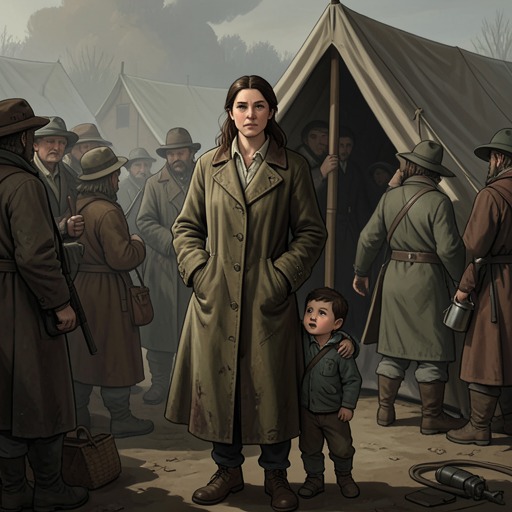
Eva and her young son Franz arrive in Argus on a spring day. Franz carries his mother’s purse from the train, proud of the small responsibility. Fidelis, worn down by working two or three jobs, speaks aloud in his exhaustion when he means only to think; he greets Eva with a word that conveys his sense of having brought her everything. Eva, seeing the sparse surroundings, privately questions what that everything amounts to. The reunion thus joins the hope of a family’s new beginning to the hardship of the place where they must make their home.
Work, Friendship, and Care
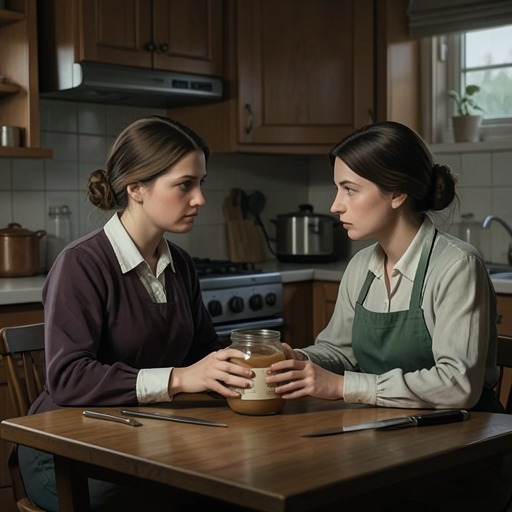
Eva becomes a friend and collaborator to Delphine. Their connection first takes shape in Waldvogel’s Meats, where Delphine arrives as a customer and the two meet over lard. Later, Delphine works alongside Eva and comes to understand the daily effort required to sustain the household and business. Eva teaches Delphine a dumpling-soup recipe; Delphine remembers that lesson with affection, admitting that she can never make the dish exactly as Eva did. Food and shared work preserve their friendship in practical as well as emotional form.
As Eva’s health deteriorates, Delphine sees how much effort ordinary life costs her. Eva sometimes says she needs to lie down for a minute, and Delphine finds her asleep so deeply that she cannot bring herself to wake her. At the shop, Delphine takes on the demanding work of cleaning and waxing the linoleum, planning her schedule around the store’s opening and her morning coffee with Eva. These routines show care as sustained labor: Delphine keeps the business functioning while attending to the friend whose strength is fading.
The crisis becomes urgent when Delphine returns from Doctor Heech’s house to find Fidelis away looking at livestock with a farmer. Eva is in the delivery car, sedated with morphine, and Delphine has medical instructions in hand. Doctor Heech contacts a surgeon and explains that Eva has a tumor pressing on vital organs and may die within days unless it is removed. The episode reveals how rapidly the household must move from familiar daily care to emergency treatment, with Delphine acting on Eva’s behalf while Fidelis is absent.
Illness, Disclosure, and Death
During her illness, Eva gathers her sons and tells them that she has seen something reassuring, but that it has nothing to do with church, communion, or confirmation. The reassurance is presented as a personal conviction rather than a formal religious teaching. At the same time, her final conversations bring a concealed family fact into the open. Eva tells Delphine that Franz does not know Fidelis is not his biological father: Franz’s father was Johannes Grunberg, a Jewish man who died in the war. Fidelis already knows the truth but has never spoken of it.
Eva’s disclosure clarifies the layered foundation of the family. The man who married her in fidelity to Johannes’s memory has also raised Johannes’s son as his own, while Franz has grown up without knowing the distinction. Eva does not describe this as a reason to diminish Fidelis’s fatherhood; rather, the revelation makes the love and responsibility within the family more visible. Her request to Delphine is equally direct: she wants Delphine alone to handle her body and to write to her mother, telling her that Delphine cared for her and that she loved Fidelis.
Eva dies and is buried in Argus rather than returned to Germany. The decision leaves her far from the graves of her own parents, a distance that had sometimes troubled her, but her burial place becomes part of the landscape of the family’s life in America. Delphine plants a small pine behind Eva’s gravestone, leaving room for it to grow, and takes comfort in imagining its roots reaching down around her friend. Fidelis buys a large cemetery plot and is to lie beside Eva; Delphine later thinks she would rather have Eva between herself and Fidelis. Even the arrangement of graves reflects the relationships Eva helped create.
Legacy and Narrative Significance
Eva remains present through objects and habits that outlast her. Delphine keeps using Eva’s recipe while acknowledging that its flavor cannot be reproduced exactly. In her sickroom, she has the quilt Eva made draped over her; tracing its small stitches, she feels that the work keeps Eva’s personality near and, in a sense, keeps her alive. These tangible inheritances make memory more than recollection: Eva’s care continues to shelter and guide the people who knew her.
Her absence also shapes Fidelis’s and the children’s ways of remembering. Fidelis rarely speaks openly about her, and after her funeral her possessions seem to disappear from the household. Markus experiences the silence as if Eva had never existed, while Delphine is the one who continues to say her name. Franz’s attachment to his mother is profound, and Delphine recognizes that his love for her may remain powerful and difficult. The family’s different forms of grief—silence, remembrance, and continuing devotion—show how Eva’s death alters their relationships without ending her influence.
Eva’s life binds several kinds of kinship together: a marriage begun through a promise to a dead friend, a fatherhood grounded in care rather than biology, and a friendship sustained through work and everyday attention. The novel’s later images of Fidelis remembering their intimacy, Delphine preserving her recipe and quilt, and Franz hearing his mother’s voice during wartime danger all extend Eva’s presence beyond her death. She is not only the lost center of the Waldvogel household; she is also one of the people through whom its bonds of loyalty, love, and memory become legible.